


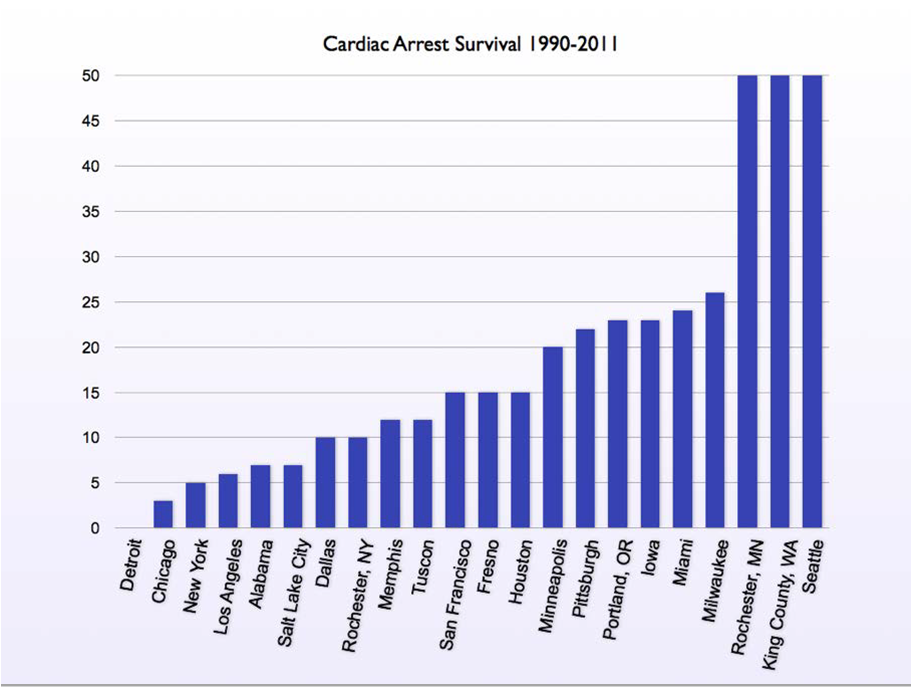
Surviving SCA may depend on your location
28th Oct 2017
In early January, a minister on staff at St. James United Church reflected on how valuable the AED at her church was last Christmas Eve when it saved her own life during cardiac arrest. Robinson said the AED had been installed two months prior to the device being deployed for the first time, on her. A church coworker, Rev. Laura Sundberg, was able to apply the AED and perform CPR with a 911 operator’s assistance. Nearly 8.5 minutes later, the paramedics arrived to take over with advanced care.
Thanks to the quick actions of Sundberg, Robinson’s life was saved.
For every 60 seconds that pass without CPR or defibrillation, chances of survival for a person in cardiac arrest drops by 10%. Within 4-5 minutes, brain damage begins to occur due to the lack of oxygenated blood. In the U.S. alone, approximately 390,000 people die from sudden cardiac arrest each year.
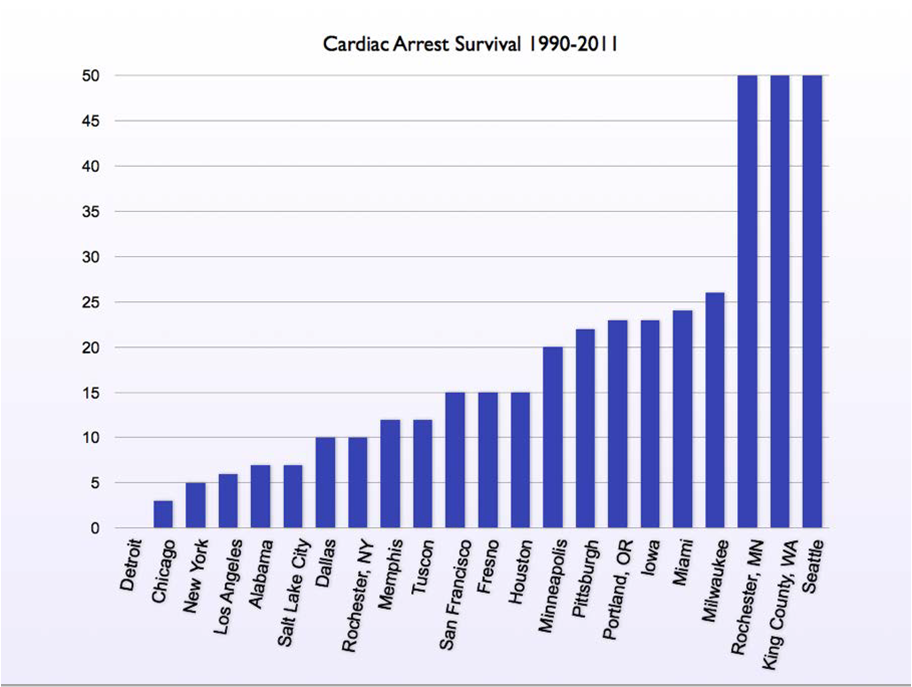
Primarily due to lack of public awareness and willingness to take immediate action as a bystander, the national average of cardiac arrest survivability in the U.S. remains less than 10%. Survivability rates do vary depending on where you are located. According to some reports, Omaha’s survival rate is a dismal 3%, while Seattle’s survival rate is 45% and showed that citizens performed CPR in 44% of cardiac arrest events measured.
Automated External Defibrillators have been around for decades, yet they are still not as commonly known to the general public as well as other community safety devices, like a fire extinguisher. AEDs are easy to use by anyone as they provide voice instructions to the user, guiding them through the rescue process and will not shock unless the AED detects that the patient’s heart rhythm requires it.
AEDs are becoming more common than in years past, however, there is much room for improvement in public awareness of AEDs, implementing AED programs and training individuals in the use of AEDs and CPR. Defibrillators should be widely available in the public access community, including schools, gyms, churches, grocery stores, malls and workplaces.
For more information on AED's visit Stop Heart Attack